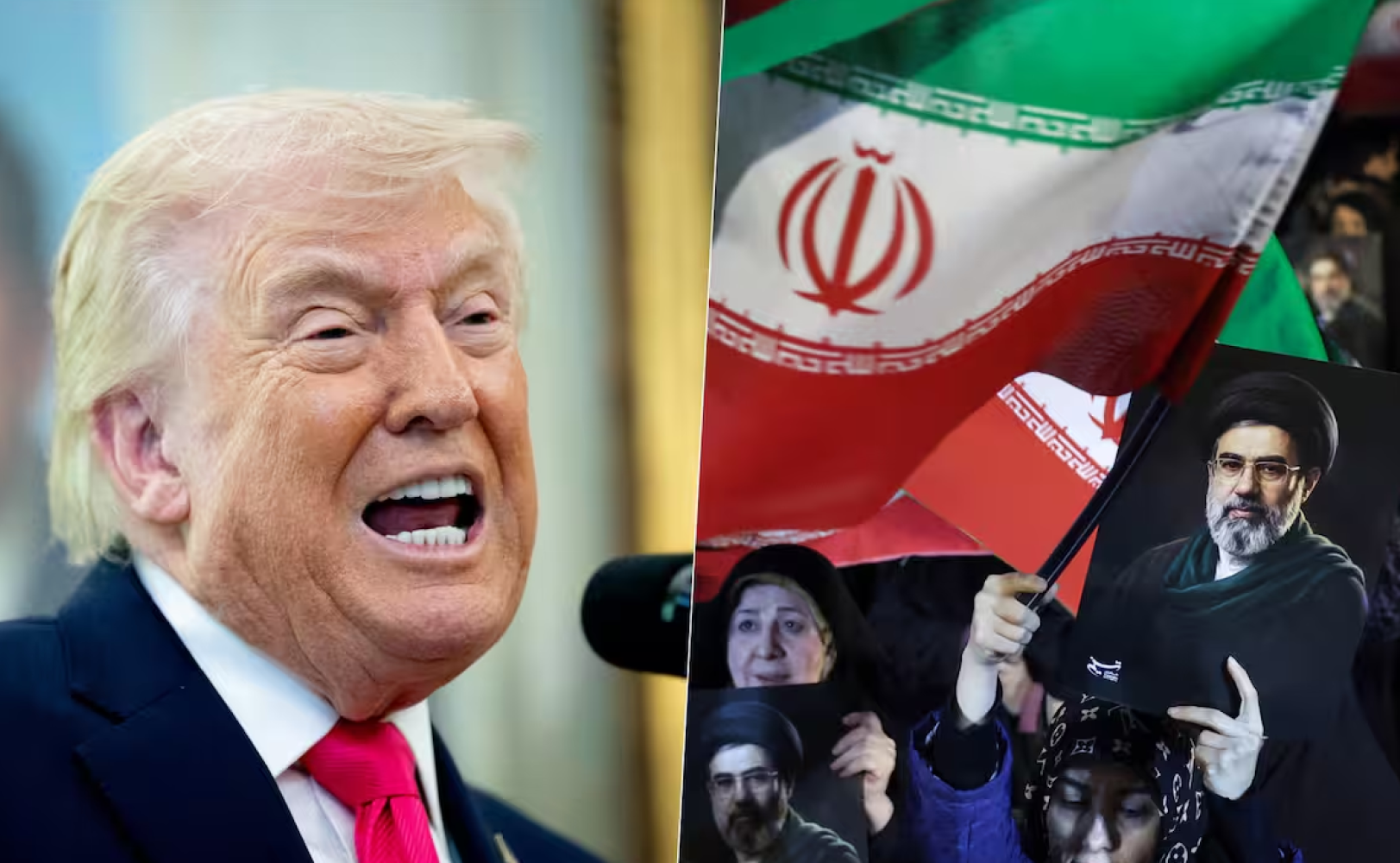
Tensions between the United States and Iran have risen sharply following a new wave of military attacks across the Gulf region. Tehran launched missiles and drones against American installations in several countries, while Washington responded with a large scale operation targeting Iranian military infrastructure.
According to Iranian authorities, the attacks struck facilities used by United States forces in Bahrain, Kuwait, Oman, Jordan and Qatar. The Islamic Revolutionary Guard Corps claimed responsibility for the operations and renewed its demand for American forces to withdraw from the Middle East.
The United States responded by striking more than 300 targets inside Iran. The operation reportedly involved air defence systems, drone launch sites, naval platforms and other strategically important military facilities. Washington said the purpose of the response was to protect American personnel and preserve freedom of navigation in international waters.
The Strait of Hormuz remains at the centre of the crisis. Iran claims to have regained control over the strategic passage and has stated that vessels travelling through the area will need authorisation from Iranian authorities. Tehran has also warned that further incidents could occur, increasing concerns about possible attacks on commercial vessels, oil tankers and energy infrastructure.
The Strait of Hormuz connects the Persian Gulf with the Gulf of Oman and serves as one of the most important maritime routes for global energy trade. It is essential for oil and gas exports from Saudi Arabia, Iran, Iraq, Kuwait, Qatar and the United Arab Emirates.
Before the conflict intensified, approximately 20 per cent of the world’s oil supply passed through the strait. Any prolonged disruption, even a partial restriction, could significantly reduce the amount of energy available on international markets and push prices higher.
The first economic effects are already becoming visible. Oil prices have increased by more than 4 per cent, with Brent crude approaching 80 dollars per barrel. Major Asian and European stock markets also began the week under pressure as investors reacted to the possibility of further military escalation.
South Korean markets recorded some of the largest declines, partly because of heavy selling in the technology and semiconductor sectors. Japanese indices also moved lower, while European investors reduced their exposure to riskier assets. At the same time, the United States dollar strengthened against several major international currencies as demand for safer assets increased.
Higher oil prices could also create renewed inflationary pressure. Energy costs affect transportation, manufacturing, logistics and consumer prices, meaning that a prolonged increase could spread throughout the global economy.
If inflation begins to accelerate again, central banks may be forced to keep interest rates elevated for longer or introduce additional restrictive measures. Such a scenario would increase borrowing costs for companies and households, affect mortgage payments, weaken consumer spending and place further pressure on international economic growth.
The latest military offensive could also undermine the provisional agreement reached between Washington and Tehran last month. That arrangement was expected to support the reopening of the Strait of Hormuz and create conditions for further diplomatic negotiations.
United States President Donald Trump has declared that the ceasefire is over, although he has not completely ruled out the possibility of renewed talks. Iran, however, has accused Washington of negotiating in bad faith and argues that its latest measures in the strait are necessary to protect national security.
The positions of the two governments remain far apart, and there are currently few signs that tensions could be reduced quickly. Continued military exchanges would increase the risk of a wider regional conflict and make diplomatic mediation significantly more difficult.
The crisis extends beyond the United States and Iran. Gulf countries hosting American military bases could become direct targets, while damage to ports, refineries or energy terminals could immediately affect regional exports.
Even a single incident involving a commercial vessel or military installation could trigger another round of retaliation and draw additional regional powers into the confrontation. Countries that depend heavily on energy imports would also face higher costs and potential supply shortages.
For these reasons, the situation in the Strait of Hormuz has become one of the most serious risks to international stability. Developments over the coming hours will be crucial in determining whether commercial shipping can continue safely, whether the United States launches further operations and whether Washington and Tehran are willing to accept another diplomatic mediation effort.

Πλοηγηθείτε στις αγορές συναλλαγών και ανακαλύψτε έναν κόσμο ευκαιριών.
Ο ιστότοπος Bullwaves.global ανήκει στην Moonance LLC, εταιρεία εγγεγραμμένη στον Άγιο Βικέντιο και τις Γρεναδίνες με αριθμό μητρώου 2141 LLC 2022 και έδρα στον πρώτο όροφο, First St Vincent Bank Ltd Building, James Street, Kingstown, Άγιος Βικέντιος και Γρεναδίνες.
Η Moonance LLC είναι εξουσιοδοτημένη και ελέγχεται από την MISA με αριθμό άδειας T2022122.
Η ETX Services Limited με αριθμό εγγραφής εταιρείας HE455407, εταιρεία εγγεγραμμένη στην Κύπρο με έδρα την Αρχιεπισκόπου Μακαρίου ΙΙΙ 160, 3026 Λεμεσός, έχει οριστεί ως Ανεξάρτητος Αντιπρόσωπος και Διανομέας.
Αποποίηση Ευθύνης Κινδύνου:
Τα εξωχρηματιστηριακά παράγωγα είναι σύνθετα μέσα και ενέχουν υψηλό κίνδυνο ταχείας απώλειας του αρχικού σας κεφαλαίου λόγω μόχλευσης. Θα πρέπει να εξετάσετε αν κατανοείτε τον τρόπο λειτουργίας των εξωχρηματιστηριακών παραγώγων και αν έχετε την οικονομική δυνατότητα να αναλάβετε το υψηλό επίπεδο κινδύνου για το κεφάλαιό σας. Η επένδυση σε εξωχρηματιστηριακά παράγωγα ενέχει σημαντικούς κινδύνους και δεν είναι κατάλληλη για όλους τους επενδυτές.
Κατά την απόκτηση των παραγώγων προϊόντων μας, δεν έχετε κανένα δικαίωμα, απαίτηση ή υποχρέωση επί του υποκείμενου χρηματοοικονομικού περιουσιακού στοιχείου. Η Moonance LLC δεν παρέχει χρηματοοικονομικές συμβουλές και όλες οι υπηρεσίες παρέχονται αποκλειστικά σε επίπεδο εκτέλεσης εντολών. Οι πληροφορίες έχουν γενικό χαρακτήρα και δεν λαμβάνουν υπόψη τους οικονομικούς σας στόχους, τις ανάγκες ή τις προσωπικές σας συνθήκες. Σημαντικά νομικά έγγραφα σχετικά με τα προϊόντα και τις υπηρεσίες μας είναι διαθέσιμα στον ιστότοπό μας. Θα πρέπει να διαβάσετε και να κατανοήσετε αυτά τα έγγραφα πριν υποβάλετε αίτηση για οποιοδήποτε προϊόν ή υπηρεσία της Bullwaves και να λάβετε ανεξάρτητες επαγγελματικές συμβουλές, εάν είναι απαραίτητο.
Περιφερειακοί Περιορισμοί:
Οι πληροφορίες ή οι υπηρεσίες που περιγράφονται σε αυτόν τον ιστότοπο δεν απευθύνονται ούτε προσφέρονται σε κατοίκους του Βελγίου, των Μαλδιβών, της Βόρειας Κορέας, των Ηνωμένων Πολιτειών, του Αφγανιστάν, της Κεντροαφρικανικής Δημοκρατίας, της Κίνας, της Κούβας, της Λιβύης, της Νικαράγουας, της Παλαιστινιακής Αρχής/Γάζας/Δυτικής Όχθης, της Βενεζουέλας και σε δικαιοδοσίες που περιλαμβάνονται στις λίστες κυρώσεων της FATF και της ΕΕ/ΟΗΕ, ή σε οποιοδήποτε άλλο πρόσωπο σε δικαιοδοσία όπου η διανομή ή η χρήση τους θα ήταν αντίθετη με τους τοπικούς νόμους ή κανονισμούς. Για περισσότερες πληροφορίες, παρακαλούμε επικοινωνήστε με την υποστήριξή μας. Οι πελάτες που εγγράφηκαν μέσω του www.bullwaves.com μπορούν να επικοινωνήσουν με την ομάδα υποστήριξής μας στο support@bullwaves.com. Για παράπονα, παρακαλούμε στείλτε μας email στο compliance@bullwaves.com
Επικοινωνήστε μαζί μας τηλεφωνικά: +44 7488 822576
Risk Warning: CFDs are complex instruments and come with a high risk of losing money rapidly due to leverage. Investors should consider whether they understand how CFDs work before investing.